
History: the four colours of Périgord in Dordogne
The history of the Périgord has been shaped by its diverse natural environment and its remarkable architectural heritage. This variety has led to a tourist division into four designations symbolised by colours: Périgord Noir, Périgord Vert, Périgord Blanc and Périgord Pourpre.
These four colours represent the specific features of the department’s four tourist areas: Périgord Noir (south-east), Périgord Vert (north), Périgord Blanc (central area around Périgueux) and Périgord Pourpre (south-west around Bergerac and its vineyards).
To better understand and visualise the four colours of the Périgord, we have listed the characteristics of each area through tourist sites that reflect their identity.
What is the difference between the Dordogne and the Périgord?
Before going any further, it is useful to remember that today the Périgord and the Dordogne department refer to the same territory.
During the French Revolution, the National Assembly created the departments in order to simplify the administrative organisation of France. As the names were chosen according to geographical or hydrographic criteria, the Périgord was given the name of its main river: the Dordogne.
Périgord is therefore the historical and tourist name given to the Dordogne department, symbolising authenticity, local traditions and gastronomy.

The 4 colours of the Périgord: Périgord Noir
Among the four colours of the Périgord, we find the designation Périgord Noir, introduced in 1702 when the region was divided into two parts: Périgord Blanc and Périgord Noir.
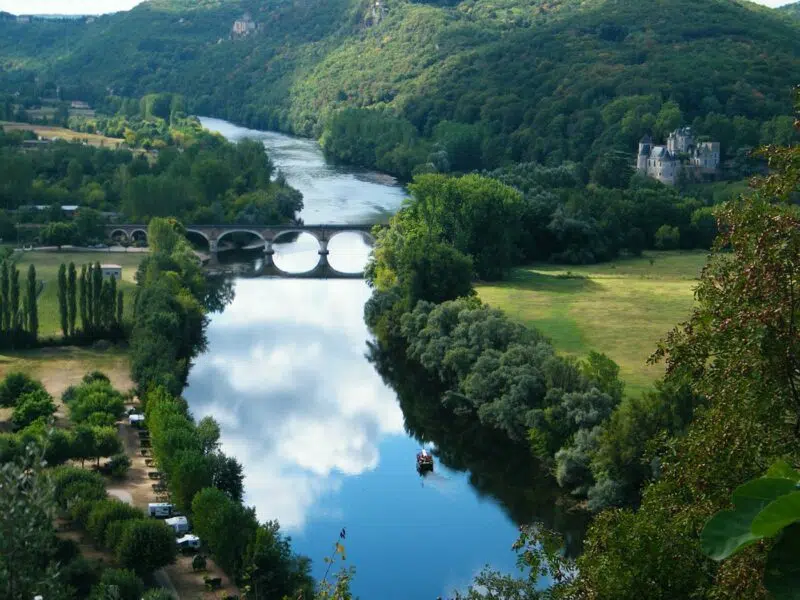
Périgord Noir takes its name from its dark oak forests, which give this south-eastern part of the Dordogne its deep colour. The must-see sites of Périgord Noir are numerous, including:
Its castles: historic monuments and exceptional panoramas
-
Château de Losse and its gardens: listed as a Historic Monument, it is located 5 km from Montignac-Lascaux opposite the Vézère River. This elegant medieval fortress also features “Remarkable Gardens”.
-
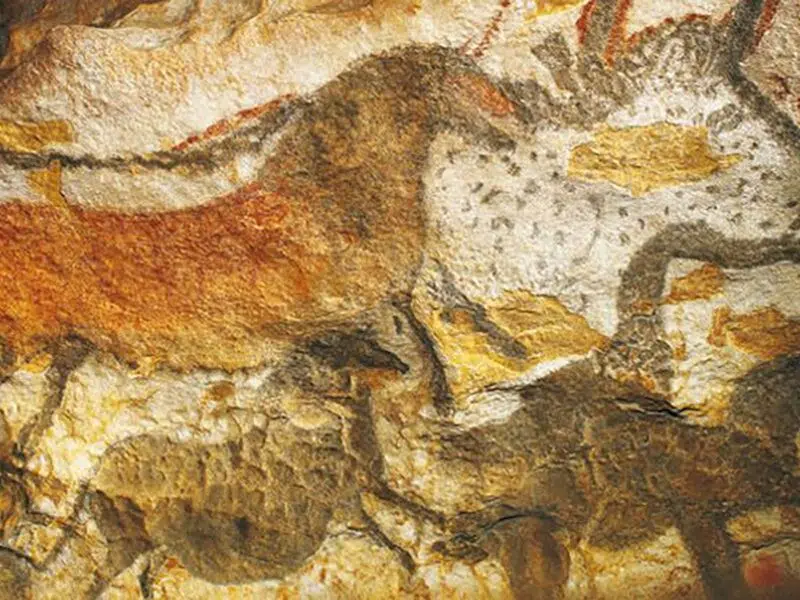
Château de Commarque: a former fortress located in the commune of Les Eyzies, about 35 minutes by car from our 3-star campsite. Beyond its stone architecture and towers, it also offers insight into Cro-Magnon history: beneath the cliff lies a cave containing prehistoric engravings.
Its many villages listed among the Most Beautiful Villages of France
The Dordogne has many villages awarded the label “Most Beautiful Villages of France”. Périgord Noir alone has several within its territory. Here is a non-exhaustive list:
- Sarlat-la-Canéda: to discover regional specialities or enjoy the many events held during high season.
- La Roque-Gageac: to stroll through the village streets or enjoy a traditional boat trip on the Dordogne.
- Castelnaud: to visit its Museum of Medieval Warfare or the Château des Milandes, linked to Josephine Baker.
- Belvès: to explore the town of seven bell towers or taste local gastronomy at the traditional covered market.
- Domme: to discover the remains of the Royal Bastide and admire the blond-stone houses.
Visiting these villages is a must for travellers discovering Périgord Noir, whether for a weekend or a longer stay.
A unique natural setting
Beyond its historical and architectural richness, the natural landscapes of Périgord Noir are unmissable. You can enjoy them from above during a hike or climbing activity, or directly on the water during a canoe trip or a traditional flat-bottom boat ride.
The 4 colours of the Périgord: Périgord Vert
The designation Périgord Vert comes from the area’s abundant meadows, forests and plains. It is the lush vegetation of this northern part of the department that gave rise to its tourist name.
The best-known towns of Périgord Vert include Nontron, Brantôme, Ribérac, Lanouaille and Saint-Pardoux-la-Rivière, where greenery and architectural heritage blend together.
Brantôme: “the green Venice of the Périgord”
In Brantôme, there is plenty to do. During your visit, you can:
- Discover the Benedictine Abbey of Brantôme: one of the most visited in France, with a bell tower dating from the 11th century.
- Enjoy the lush vegetation: during a boat trip, canoe outing or a stroll through the monks’ garden.
Must-see visits in Périgord Vert
- Château de Jumilhac: a renowned château whose history dates back to the 12th century, with major developments in the late 16th century.
- The Cluzeaux of Saint-Pardoux-de-Mareuil: caves adapted during the Middle Ages, typical examples of troglodyte architecture.
The 4 colours of the Périgord: Périgord Blanc
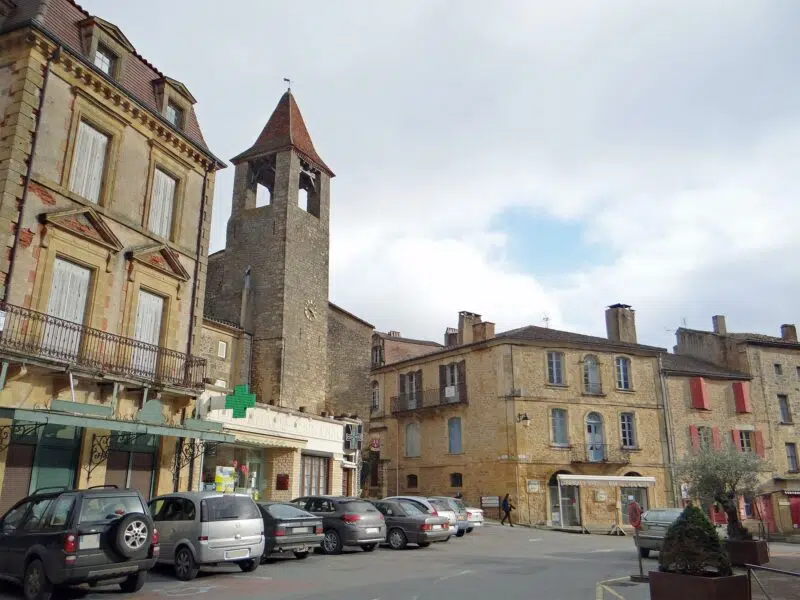
The Périgord Blanc is located in the centre of the department. Périgueux is its main town and the administrative heart of the Dordogne.
The “white” designation is linked to the limestone plateaus, soils and rock. The landscape is marked by limestone hills and by the lime produced in the quarries of Saint-Astier.
Périgueux: a city rich in historical heritage
The city’s historical and cultural heritage is remarkable. You can discover several periods: Prehistory at the Museum of Art and Archaeology of the Périgord, the Gallo-Roman era at the Vesunna Museum, and the Renaissance, whose architecture shapes many streets of the town.
Périgueux also offers summer events: a friendly night market on Wednesday evenings, concerts and local shows.
If you visit Périgord Blanc, you will also find towns such as Vergt, Mussidan, Neuvic, Saint-Astier, Montpon-Ménestérol and Sorges. Here you will discover several exceptional châteaux:
-
Château de Hautefort: a former fortress built on a rocky spur, remarkable for its architecture and gardens.
-
Saint-Front Cathedral: redesigned in the 19th century by Abadie, also known for the Basilica of the Sacré-Cœur in Montmartre.
The 4 colours of the Périgord: Périgord Pourpre
The “purple” designation appeared towards the end of the 20th century, around 1990, in reference to the vineyard landscapes that dominate this area.
Périgord Pourpre lies in the south-west of the Dordogne. Bergerac is its symbolic capital. It is also a land rich in bastide towns, including Beaumont-du-Périgord, Issigeac, Monpazier, Lalinde and Eymet.
Bergerac: a wine town with the “Town of Art and History” label
Beyond its wines, Bergerac is a charming town to explore. You can visit the Costi Museum, stroll along Quai Cyrano on the banks of the Dordogne, or wander through the narrow streets of the historic district.
Must-see châteaux of Périgord Pourpre
-
Château de Montréal: built on high ground, surrounded by period furnishings and with access to a small cave.
-
Château de Bridoire: a 40-hectare estate remarkable for its architecture. It was notably inhabited by the de Foucauld family (1806–1938).
- The Cloister of Cadouin: listed as a historic monument and inscribed on the UNESCO World Heritage list as part of the Routes of Santiago de Compostela. Self-guided or guided tours available.
Ultimately, the four colours of the Périgord reflect the geographical and landscape diversity of the Dordogne. A rich and scenic region, whichever “Périgord” you choose to explore during your stay.